Posts

Showing posts with the label Business suggestion

Preparing a Package of Practices (POP) for Organic Cultivation Farmers as per Local Conditions

Image
Organic farming is gaining popularity due to its benefits for health, the environment, and sustainability. To help farmers transition to or improve their organic farming methods, a well-designed Package of Practices (POP) is essential. This guide should be tailored to local conditions to ensure practicality and effectiveness. Here’s how to prepare a POP for organic cultivation farmers: 1. Soil Preparation Start with a soil analysis to understand the nutrient profile and pH levels. Based on the results, recommend organic soil amendments such as compost, manure, or green manure crops. These enrich the soil naturally, improving fertility and structure. 2. Crop Selection and Rotation Choose crops that are well-suited to the local climate and soil conditions. Implement crop rotation plans to prevent soil depletion and reduce pest and disease cycles. Include legumes in the rotation to naturally fix nitrogen in the soil, benefiting subsequent crops. 3. Organic Fertilizers List organic fertili...

Propagating Life: A Guide to Germinating New Plants through Cuttings

Image
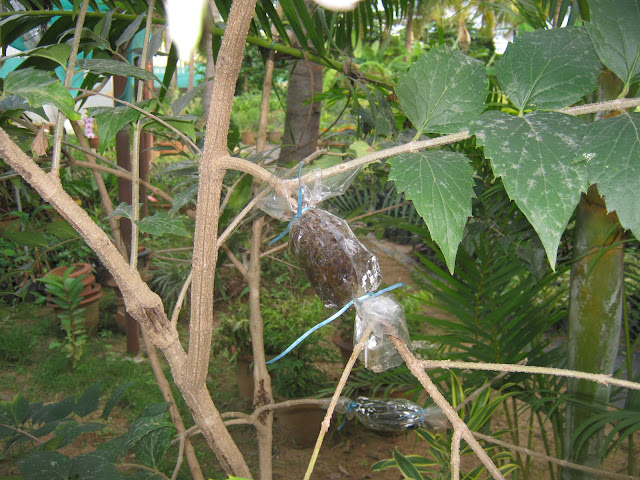
The art of germinating new plants from cuttings is a fascinating and rewarding journey into the world of horticulture. This method, known as vegetative propagation, allows gardeners to create clones of their favorite plants, preserving desirable traits and ensuring a continuation of cherished varieties. From vibrant flowering shrubs to succulent beauties, here's a closer look at the process of germinating new plants through cuttings. 1. Selecting the Right Cuttings: The journey begins with the careful selection of cuttings. Opt for healthy, disease-free stems that are neither too young nor too old. The ideal cutting typically consists of a section of the stem with a few nodes or leaves. 2. Preparing the Cuttings: Once selected, the cuttings should be prepared with precision. Trim the cutting just below a node, as this is where the roots will likely emerge. Remove excess leaves, especially those near the lower portion of the cutting, to reduce water loss and encourage root develop...

Situation of Organic Farming in Bharat

Image
Organic farming in Bharat, or India, is gaining momentum as more farmers embrace sustainable and eco-friendly agricultural practices. The organic movement in Bharat is marked by a deep connection to traditional farming methods and a commitment to environmental stewardship. Across the diverse landscapes of the country, organic growers are pioneering a shift towards holistic and sustainable agriculture. One of the defining features of organic growers in Bharat is their reliance on traditional wisdom and indigenous knowledge. Many farmers draw upon age-old practices, passed down through generations, that emphasize the importance of biodiversity, natural pest control, and organic fertilizers. This connection to tradition is not merely nostalgic but reflects a profound understanding of the local ecosystem and the need for harmonious coexistence with nature. In states like Sikkim, Bharat has witnessed an inspiring example of organic transformation. Sikkim became India's first fully organ...

Importance of Bio-Fertilizer in organic farming

Image
The Green Revolution of the mid-20th century brought about significant advancements in agricultural productivity, but it also led to an overreliance on synthetic fertilizers and chemicals. As we strive to build a sustainable and environmentally-friendly future, the importance of biofertilizers in farming has become increasingly evident. Biofertilizers, also known as organic fertilizers, are beneficial microorganisms that enhance soil fertility, promote plant growth, and mitigate the harmful effects of chemical fertilizers. This article explores the significance of biofertilizers in modern agriculture and their positive impact on both the environment and crop production. Soil Health and Fertility: One of the primary advantages of biofertilizers is their ability to improve soil health and fertility. Biofertilizers introduce beneficial microorganisms, such as nitrogen-fixing bacteria, phosphate-solubilizing bacteria, and mycorrhizal fungi, into the soil. These microorganisms help to break...

Organic certification

 Organic certification is a process that verifies that agricultural products have been grown and processed according to strict standards that prioritize the use of natural methods and materials. The goal of organic certification is to provide consumers with assurance that the food they purchase has been produced in an environmentally friendly and sustainable way, without the use of synthetic pesticides, herbicides, or fertilizers. The process of organic certification is typically overseen by an independent third-party organization, such as the United States Department of Agriculture (USDA) or the Organic Materials Review Institute (OMRI). These organizations evaluate the entire supply chain of a product, from its production to its packaging and labeling, to ensure that it meets the requirements of organic certification. The specific requirements for organic certification can vary depending on the country or region where the product is produced. However, in general, organic certific...

Inspection of Organic Farm

Image
Organic farming has been gaining popularity in recent years due to its numerous environmental and health benefits. However, organic farming is not just a matter of avoiding synthetic fertilizers and pesticides. In order to be certified organic, farms must undergo regular inspections to ensure that they meet a set of strict standards. These inspections are conducted by certifying bodies, which are authorized by government agencies to inspect and certify organic farms. The purpose of an organic inspection is to verify that a farm meets the requirements of organic certification. These requirements include: Organic farming practices: Organic farming practices must be used to grow crops and raise livestock. This includes avoiding the use of synthetic fertilizers and pesticides, and using natural methods to control pests and weeds. Soil health: Soil must be managed in a way that maintains or improves its fertility, structure, and biological activity. Organic farms must use practices such as ...

Organic Sugarcane in UP

Image
Organic sugarcane cultivation in Uttar Pradesh (UP) has become increasingly popular in recent years as farmers and consumers alike have become more conscious of the environmental and health impacts of conventional farming practices. Organic sugarcane cultivation in UP can provide a sustainable solution to the challenges faced by the sugarcane industry, including soil degradation, pest and disease resistance, and climate change. Sugarcane is one of the most important cash crops in UP, and the state accounts for a significant proportion of India's sugarcane production. However, conventional sugarcane farming practices have led to significant environmental and social issues, including soil erosion, water pollution, and the use of harmful pesticides and fertilizers. Organic sugarcane farming offers a sustainable alternative to these problems. Organic sugarcane cultivation in UP involves the use of natural methods and techniques to grow sugarcane without the use of synthetic chemicals o...

Organic Tomato Cultivation

Image
Organic tomato cultivation is a method of farming that focuses on producing high-quality tomatoes without the use of synthetic chemicals and pesticides. This type of farming is not only environmentally sustainable but also offers numerous health benefits to consumers, as organic tomatoes are free of harmful toxins and chemical residues. In this article, we will discuss the key aspects of organic tomato cultivation, including soil preparation, seed selection, planting, pest management, and harvest and post-harvest handling. Soil Preparation: The first and foremost step in organic tomato cultivation is soil preparation. The soil must be well-drained, fertile, and have a pH between 6.0 and 6.8. Before planting, the soil should be tested to determine its pH level, nutrient content, and any potential contaminants. To improve soil fertility, organic matter, such as compost, should be added to the soil. This will provide essential nutrients to the plants and help to retain moisture. Seed Sel...